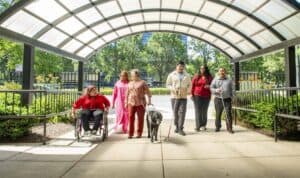
Seeing the Impact, Securing the Future
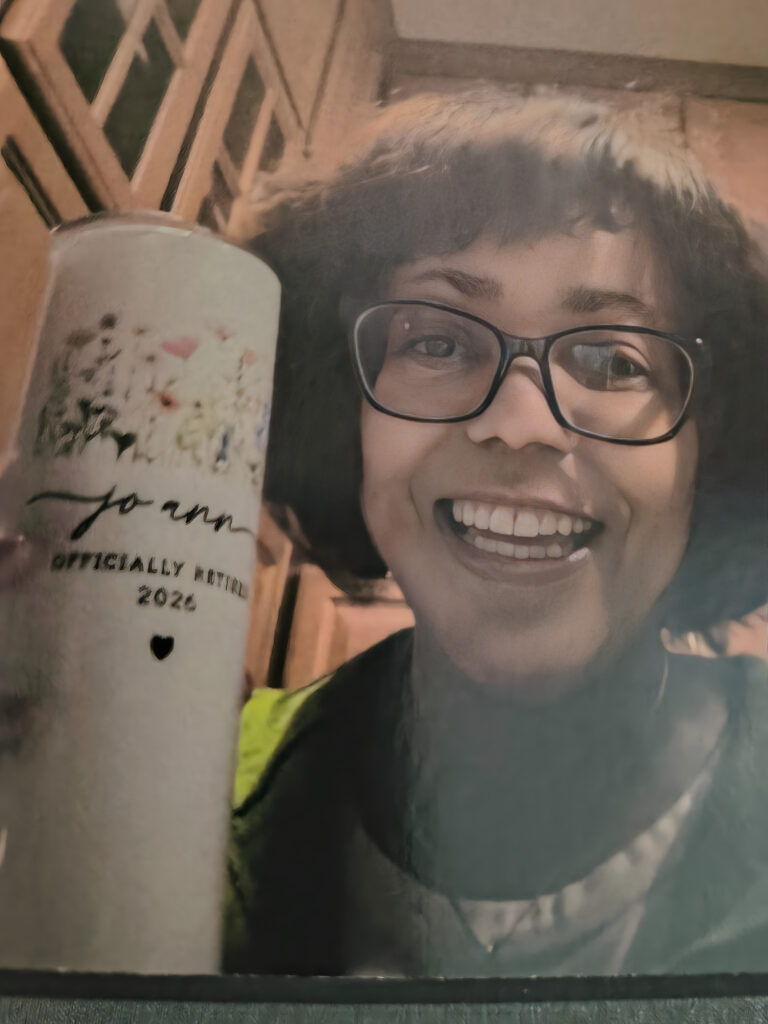
CLH Donor J.A.
As a member of the Corwith Hammill Society, which recognizes individuals who have contributed to The Chicago Lighthouse for 10 years or more, J.A. is deeply familiar and impressed with The Chicago Lighthouse’s work helping people of all ages with vision loss.
J.A. has contributed consistently since the early 1990s. After a career that included a 22-year stint working for Motorola’s accounting, finance, and operations departments and 10 years at the Federal Reserve Bank of Chicago, J.A. recently retired and chose to include The Lighthouse in her estate plan. Among her assets is her home, which is being held in a trust for The Chicago Lighthouse.
“I’m from a small family, and it was important to me to get that established as I retired,” she says. “You work hard your entire life, and you want to make sure your money is distributed properly.”

J.A. says she has been impressed with The Lighthouse’s long legacy of helping people who are blind or visually impaired live independently. On a tour of The Lighthouse in the 1990s, she witnessed the work firsthand as a teacher in the school helped a young girl discover a slide. “Seeing her smile warmed my heart,” she says. J.A.’s history of giving is also personal. When her father lost his vision to glaucoma, he turned to The Lighthouse for assistance in making his home accessible so that he could continue living independently.
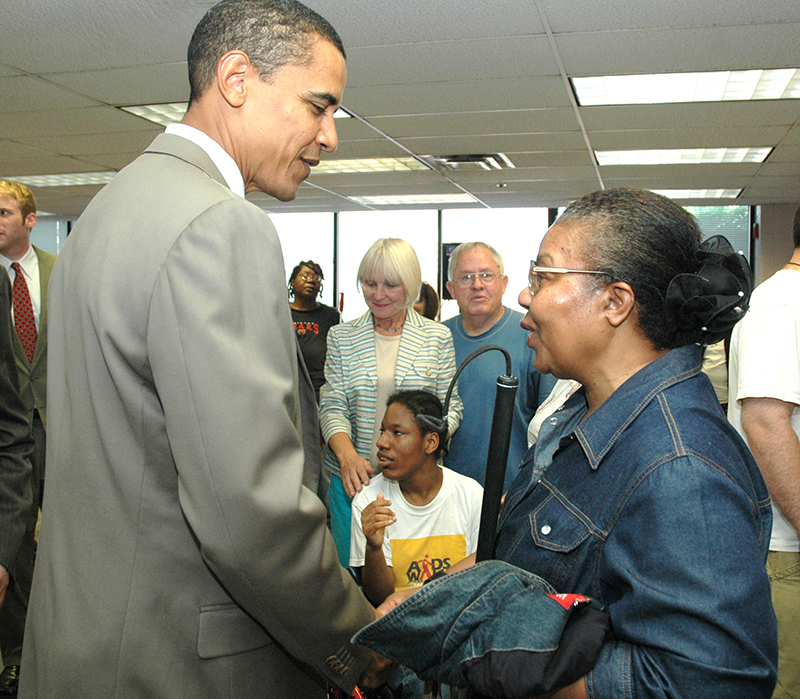
J.A.’s aunt appeared (in the background) of a photo with Barack Obama when he visited The Lighthouse in 2005.
The impact of those services hit home when J.A. took a tour of the agency and saw a familiar face in the background of a picture of then-Senator Barack Obama touring The Lighthouse. “I was getting a tour, and I saw a picture of my father’s sister with Barack Obama,” J.A. says. “It all came full circle for me.”
“The Chicago Lighthouse is very inclusive, as they offer various programs to help infants, toddlers, teens, adults, seniors, and Veterans learn how to live with their visual disabilities. This is crucial because it empowers these individuals to live with dignity, confidence and courage.”